Chuck Hagel’s Resignation: Strategic Pivot or Sacrificial Lamb?
Local Editor
US President Barack Obama's acceptance of the resignation of War Secretary Chuck Hagel left little doubt that the American administration wants to turn a page on a foreign and national security policy mired in crisis and controversy.
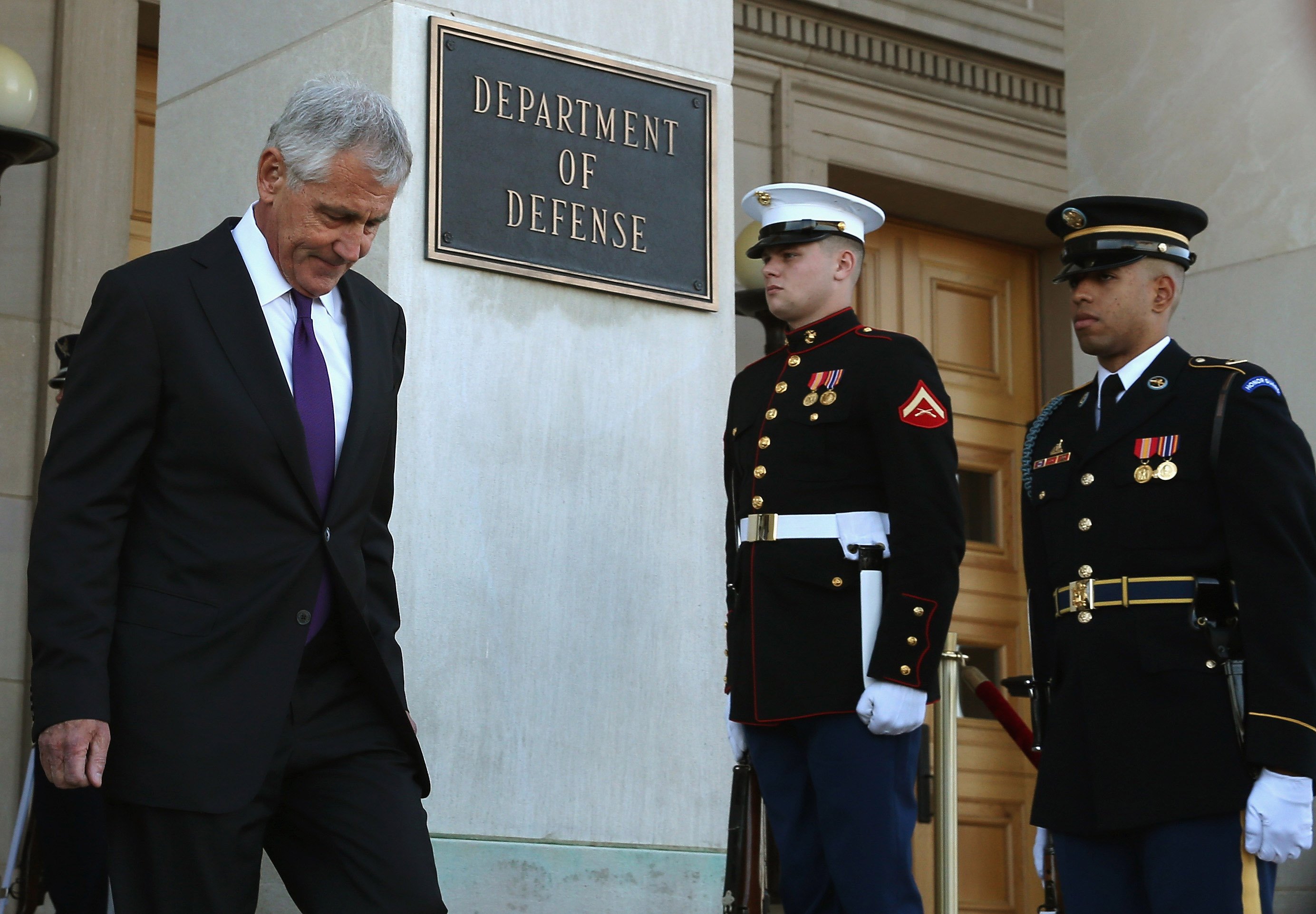 Critics have focused on the US administration's slow response to the escalating threat from the so-called "Daesh" ["ISIL"] extremist group and from its faltering nuclear negotiations with Iran; its halting reaction to Russia in the Ukrainian crisis and a threatened Ebola pandemic in Africa; and questions surrounding a still unfinished war in Afghanistan.
Polls suggest those criticisms have become an increasing drag on Obama's popularity, and have contributed to historic Republican gains in the recent midterm elections.
Moreover, when presidents ditch their defense alter egos, it's usually to send a loud message. So it was with the resignations of former Secretaries of [War] Donald Rumsfeld and Robert McNamara, both casualties of blatant wartime mismanagement in Iraq and Vietnam, respectively. Similarly, Les Aspin was terminated from the job after fumbling US military operations in Somalia, and for general managerial incompetence.
In each case, the presidents accepting the resignations of their top military official hoped to signal a change of course from what was widely viewed as a failed strategy.
Less clear is the internal role that Hagel played in each of those crises, and what policy change the White House hopes to telegraph by pressuring him to resign.
For instance, White House officials were reportedly annoyed at Hagel's comments in August that "Daesh" was an "imminent threat" and "beyond anything we have seen," which contradicted Obama's statements months earlier equating the terrorist group with a "junior varsity" basketball team.
During Obama's second term, White House officials have also continued to concentrate responsibility for decision-making on major foreign and domestic issues within a tight circle of advisers and former campaign aides surrounding the president. Hagel was apparently unable to crack that tightly knit team and to make himself clearly heard on major issues, but in that, he surely had lots of company in Obama's Cabinet.
The more important question is whether his resignation signals a change from that insular approach, and the tentative and reactive foreign and national security policies it has produced.
The alternative is that Hagel has been sacrificed on the altar of symbolism, signifying very little of substance. "I find it surprising that with only two years left and Congress in control of a hostile Republican Party, in the midst of trying to draw down one war and ramp up another, the White House would fix its ire on Chuck Hagel as the cause of a flip-flopping foreign policy," said retired four-star Gen. Barry McCaffrey.
Even as a Republican, Hagel had shown deep loyalty to Obama since endorsing him for president in 2008 over Hagel's friend and fellow Vietnam veteran Sen. John McCain, R-Ariz. As a previously wounded noncommissioned officer, he also had a special rapport with the uniformed rank and file during an era of painful war budget cuts.
"Instead of jettisoning someone of Hagel's stature, the White House team should have looked inward at their own ineffective micro-management of foreign and [war] policy, and realized you cannot manage a globe-spanning military of over 2 million men and women out of [National Security Adviser] Susan Rice's office."Though the Senate Armed Services Committee narrowly approved Hagel's nomination, and a first-ever Republican filibuster of a war secretary nomination was eventually overcome, some observers believe that he never fully recovered from the ordeal.
Moreover, unnamed White House officials who have struggled to formulate a coherent strategy for the campaign to defeat "Daesh" have also criticized Hagel for being unable to articulate it forcefully.
"I do think the Senate confirmation hearings diminished Hagel, and after that he was tentative and cautious even as Congress continued to reject his [war] budgets and proposed cuts to deal with sequestration [automatic war cuts]," said Larry Korb, a former Pentagon official and senior fellow at the Center for American Progress.
When White House officials concluded that the "team of rivals" model for the Cabinet didn't work well in the first term, he said, and drew more decision-making power to themselves, Hagel was left to publicly defend policies he had little say in formulating. "In that sense he may be sort of a sacrificial lamb," Korb added.
If historically, administrations have fired secretaries of war in order to signal a major shift and a new policy, the primary question now is: What shift in foreign and war policy does the Obama administration envision?
Some early candidates mentioned as possible replacements might signal a turn towards a more robust foreign policy, especially with regard to prosecuting the campaign to "degrade and defeat" "Daesh", and leaving a US military force in Afghanistan.
Candidates in this vein could therefore include Sen. Jack Reed, D-R.I., a West Point graduate and former paratrooper who currently serves on the Senate Armed Services Committee [though Reed, through a spokesman, has taken himself out of contention for the post]; and the outgoing SASC chairman, Carl Levin, D-Mich., who has taken positions advocating the arming of Syrian militants fighting "Daesh" and the Syrian government.Source: News Agencies, Edited by website team
Comments
US Military Faces Strain as Iran War Continues
one month ago