- Home
- ISLAMIC RESISTANCE
- SECRETARY-GENERAL
-
Full Speeches
- Speeches-2000
- Speeches-2006
- Speeches-2007
- Speeches-2008
- Speeches-2009
- Speeches-2010
- Speeches-2011
- Speeches-2012
- Speeches-2013
- Speeches-2014
- Speeches-2015
- Speeches-2016
- Speeches-2017
- Speeches-2018
- Speeches-2019
- Speeches-2020
- Speeches-2021
- Speeches-2022
- Speeches-2023
- Speeches-2024
- Speeches-2025
- Speeches-2026
- Speech-Reports
- SG
-
Full Speeches
- Voices
- Ten Day Dawn
- The Biggest Crime
- Martyr Leaders

Iran Accuses US of Causing Maritime Insecurity in Hormuz
By Staff, Agencies
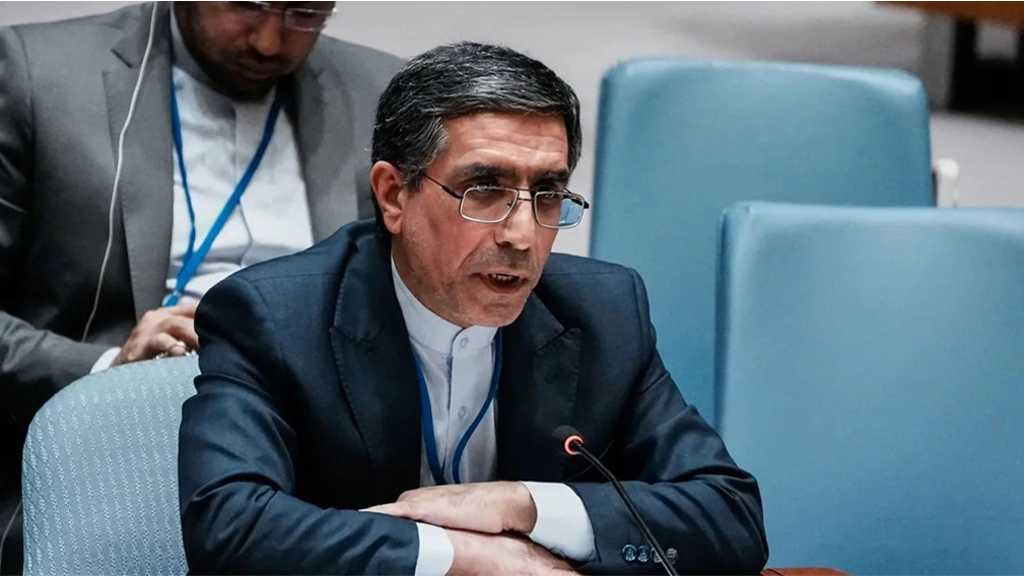
Iran’s representative to the United Nations Security Council, Gholamhossein Darzi, has condemned the United States and the "Israeli" regime over their ongoing military aggression and naval blockade against Iran, arguing that Washington’s actions are the main cause of maritime insecurity in the Persian Gulf and the Strait of Hormuz.
Addressing a Security Council meeting on maritime security, Darzi rejected attempts by Western powers to hold Tehran responsible for disruptions in the strategic waterway. He stressed that Iran had upheld freedom of navigation as a responsible coastal state for decades.
“The responsibility for any disruption, obstruction, or other interference with maritime navigation in the Persian Gulf and the Strait of Hormuz lies directly with the aggressors and those who facilitate or assist their act of aggression against Iran,” Darzi said, dismissing efforts to shift responsibility onto Tehran as unfounded.
The Iranian envoy said the Strait of Hormuz remained fully open and secure until February 28, 2026, when the United States and the "Israeli" entity launched what he described as a war of aggression against Iran, targeting civilian and maritime infrastructure, ports and vessels.
Darzi cited several incidents to support his allegations. He said US forces attacked the Iranian commercial vessel Tuska on April 19. On May 23, US Central Command (CENTCOM) announced that it had redirected 100 commercial vessels as part of efforts to enforce its naval blockade against Iran.
He also accused US forces of attacking two Iranian search and rescue vessels, Naji 15 and Naji 16, inside Iranian territorial waters on July 23 while they were carrying out humanitarian operations. Darzi further said Washington had maintained a comprehensive blockade on maritime traffic entering and leaving Iranian ports since April 12.
The diplomat described the blockade as a violation of Iran’s sovereignty and territorial integrity, as well as Article 2(4) of the UN Charter, which prohibits the threat or use of force against the political independence of states.
He also warned of the humanitarian consequences, saying the restrictions threatened civilian access to food, medicine, fuel and other essential supplies. Darzi described the measures as collective punishment that deprived civilians of necessities indispensable to their survival.
Reaffirming Tehran’s position, Darzi said any restrictions or security measures imposed by Iran in the Strait of Hormuz were defensive and lawful. He maintained that, as a coastal state, Iran had the right under international law to take measures to protect its sovereignty, territorial integrity, population and national interests against threats or aggression.
The Iranian representative called on the Security Council to demand an immediate end to what he described as Washington’s unlawful actions and ensure accountability for violations of international law and damages inflicted on Iranian civilians.
“Iran will pursue all available legal avenues to ensure that those responsible are held to account,” Darzi concluded.
Comments
- Related News